

How Everyday Objects Reflect Identity: Spoons, Books, a Hand-Carved Wooden Frog Figurine on the Bathroom Counter... They Tell Your Story.
Your identity isn't only visible in fashion or cars. It's also visible in the smaller objects that you live with every day.

Maybe it’s just me and my focus, but I feel like we think about identity in terms of big markers—your job title, your wardrobe, where you live.... However, identity doesn’t only show up in grand gestures. We all select objects that reflect our identity in our everyday lives. Everything from the books stacked next to your bed to the coffee cup that got chipped and you still use it every morning without fail. These types of things signal who we are, like a living collage of where we’ve been and what values we choose to keep close to us.
Russell Belk is a business academic (seems kind of like an oxymoron at first?) who focuses on consumer behavior. He studies what would be considered material items through the lens of identity—gift-giving, collecting, sharing, and the meanings of possessions. In his article, “Possessions and the Extended Self,” Belk preports that possessions aren’t just decoration or utility. They are part of who we consider ourselves to be.
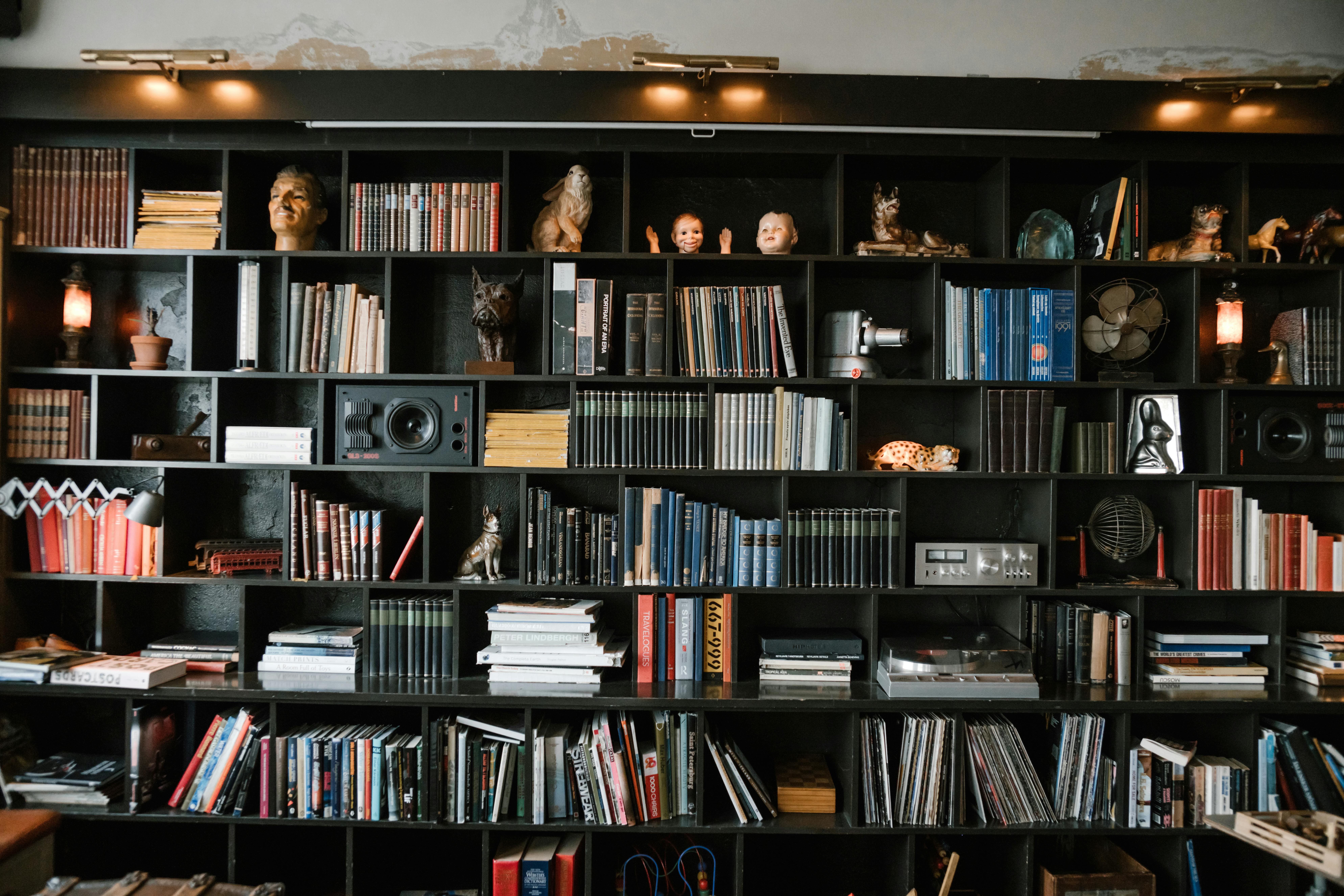
Why Objects Carry Identity
More recent research has examined how objects we choose to display or carry signal identity, not just to support ourselves but to convey who we are to others. Identity signaling includes the idea that people use material things (objects, clothes, etc.) to communicate something about themselves. This could be anything like values, affiliations, taste, and so on. Anything that builds our narrative. I should mention that signaling isn’t limited to items we use everyday— and I talked about that in a previous post.
Jonah Berger is another academic and professor (of marketing at the University of Pennsylvania) whose work focuses on consumer behavior. His research has shown that people infer others’ identities through things like cars, clothes, music, etc. And, inversely, that we make our choices as consumers to communicate group membership or values.
Because identity through objects is so personal and, at the same time, so visible, there are some points of tension. Recurring themes when we’re thinking about identity—pressure, contradictions, and balance—can be emotional heavyweights.
Performance and Imposter Complex: When material items become more about performing identity for others more than for yourself, there can be a disconnect. You might display some trendy items on the console next to your front door, but if they don’t feel like you, what is the thinking behind having them?
Change: The simple fact that identity changes and sometimes possessions from past selves feel dissonant, but letting go of them can feel like letting go of part of yourself.
Judgement: The flip side of signaling: someone might see your material objects and misinterpret your signals, which could cause friction when that judgement doesn’t connect with your words.
Space and Practicality: Not everyone has the money to obtain objects that feel like them or the space to display things. And some objects are just not practical to keep. But that doesn’t mean they’re not meaningful, even if they live in storage, in photos tucked away in an album, or in your memory.

Psychological Ownership
So what makes your possessions identity relevant? There is research around this topic that tries to explain exactly what traits make an object an identity signal. Is it how much choice you had in owning it? Your emotional investment? The level of visibility? The line seems to be drawn at functionality, but I would argue that functional possessions do reflect your identity to some extent because they support your unique life. Not everyone is going to have a table saw in their garage (if they have a garage?) or their own set of travel lunch utensils.
Loss of Material Things & Identity
About 10 years ago, I lost essentially everything I owned, with the exception of a few salvageable books, to a fire in my apartment building. And there is a sense of loss-yes, you miss your things (to this day), but the loss is ultimately having to do with your sense of self. Losing or replacing certain objects can feel like losing a piece of identity.
Russell Belk wrote that, “Our fragile sense of self needs support and we get this by having and possessing things because, to a large degree, we are what we have.”
Anthropologist Daniel Miller, in his book the Comfort of Things, studied London household and found that the objects people live with often carry emotional weight of their relationships and histories. He points out how a faded photograph, a well-worn ornament, or a humble household object can tell the story of a life in ways that furniture or valuable possessions just cannot. And this reinforces how everyday items (mugs, paper scraps, etc.) can act as vessels of identity and memory.
I recently listened to an interview with Molly Baz on the Cherry Bombe podcast; she talked about losing her home in the California fires earlier this year and how there weren’t a lot of specific things that she was concerned about, but how losing all of it made her realize how much it oriented her life and ability to feel secure through developed autopilot. And, how much effort goes into life when you suddenly don’t have that grounding aspect of objects that you’ve built up around yourself. So curating objects that reflect your identity doesn’t have to be something sentimental or decorative as much as a functional aspect of your life.
How Mindful Curation Shapes How You Feel
If you’re conscious of the everyday objects around you, they can work for you at another level, by expressing, reminding, and affirming. For examples:
Selective Display-Display items that align with who you want to be/how you want to feel. Keep books that you ccare about on your night stand or hang posters that move you or let your ceramic dishes be visible rather than stashed away in a cabinet.
Rotation and Editing-I guess this is a fancy way to say that as you evolve, some things will no longer represent you well. You don’t have to wipe everything clean and start anew, but you can let go by placing those items somewhere less visible if you feel like you can’t let go entirely.
Let Imperfection Live-I will always say this until I’m blue in the face. Please don’t misunderstand me to say that I am a slob. No. I am actually quite adamant that things be clean and tidy, but some disorder reminds you that life is in process.
Narratives and How Objects Help Tell Your Story
One way that I tend to think about objects is that they are kind of like post-it’s in a book that you’re writing everyday. I guess you may or may not relate to this, but I stick a post it on book pages with quotes I want to remember. (This sometimes makes the book about twice as thick.) For example, the objects being the sticky post-its:
You wake up first thing in the morning and you see the stack of poetry books you’re reading through (sticky). They reinforce what matters to you: ideas, emotions, reflection. Then, there’s a framed poster of an exhibition you saw in London (sticky) and loved. So that affirms your interest in culture and travel. Then, in the kitchen, your chipped coffee cup (sticky) from your trip to Sicily remains a daily reminder of your experience, plus the fact that imperfection doesn’t negate the value of it.
All of these small things shape your comfort, mood, and your sense of self; they remind you of your values, longings, what you’ve experienced, and life that you hope to live. And they communicate to friends, family, strangers; they are all invitations to understand who you are.
I think it’s important to end off, though, with saying that identity doesn’t require proof through objects—but finding pieces of your identity in objects is totally something you can experiment with.
Thanks so much for reading the Range Creative Studio Notes, where I share essays and creative content exploring identity through art and design.
Range Creative Studio Notes is a reader-supported publication.
Sources:
• Belk, Russell W. “Possessions and the Extended Self.” Journal of Consumer Research, vol. 15, no. 2, 1988, pp. 139–68. https://roomtothink.net/wp-content/uploads/2020/09/Belk-1988-Posessions-And-The-Extended-Self.pdf?utm_source=chatgpt.com Accessed 18 Sept. 2025.
• Matthew A. Hawkins & Alexandra S. Rome (2019): Identity relevant possessions, Journal of Strategic Marketing, DOI: 10.1080/0965254X.2019.1657170
• Miller, Daniel. The Comfort of Things. Polity Press, 2008.